Returning to the Church as a Family
A quiet, practical guide for families who have been away, however long it has been, and are wondering how to begin again.
The kids’ shoes are never both in the same place on a Sunday morning. Someone’s collar is crooked, someone else can’t find a jacket, and in the middle of all of it, one parent is standing at the counter wondering whether this is actually the week they follow through on going back to Mass, or whether it quietly becomes next week’s plan instead, the way it has for months.
Some families sit in the church parking lot longer than they mean to. Not because anything is wrong, but because walking in feels bigger than it should. Will the kids remember when to sit, stand, kneel. Will anyone notice how long it’s been. Is it too late to just be there again, without an explanation.
It isn’t too late. It was never too late.
Why Families Drift, and Why It Rarely Fits One Story
Families stop going to Mass for reasons that rarely look like a single dramatic decision. Sometimes it’s exhaustion, a season of life so full that Sunday became the one morning nobody had to be anywhere. Sometimes it’s a hurt that never got resolved, a comment from years ago, a disappointment with someone in leadership, a hard conversation that never happened. Sometimes there’s no story at all, just a slow drift, one missed Sunday becoming easier to justify than the next one, until months had passed without anyone deciding anything.
None of these reasons need to be sorted out before a family walks back in. Whatever the reason was, it doesn’t disqualify anyone from beginning again.
What Returning Actually Means
It’s worth naming plainly: returning to the Church isn’t primarily about a building, a schedule, or rejoining a social circle. At its center, it’s a response to Christ, who meets his people through Scripture proclaimed, through the Eucharist, through confession, through the ordinary life of a parish community. The building matters because that’s where these things happen, but the building isn’t the point.
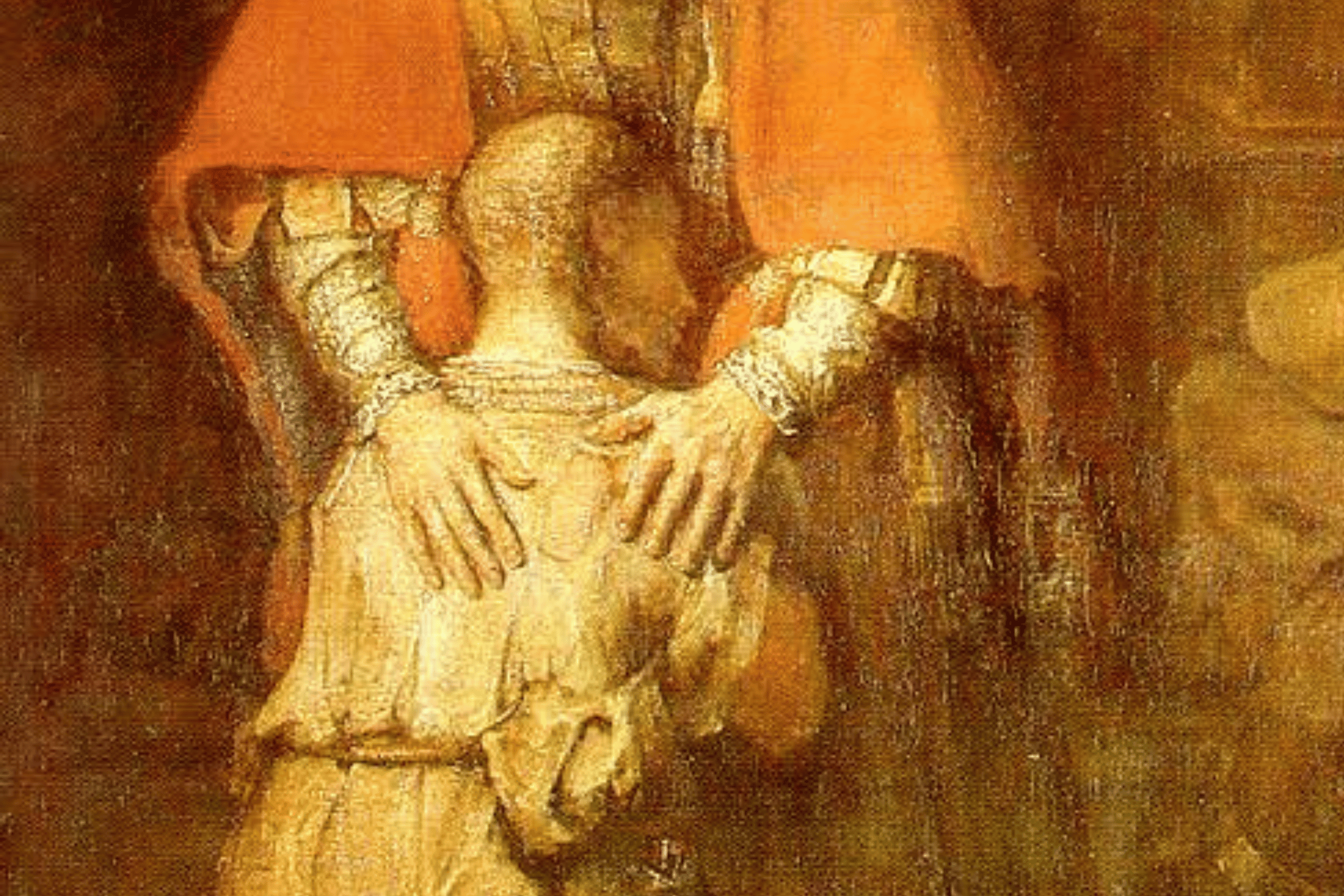
In the Gospel of Luke, a father sees his son while he’s still far off, before any explanation has been given, and runs to meet him (Luke 15:20). That’s the posture the Church teaches God holds toward anyone coming back, not a father waiting to hear the full story first, but one already moving toward you.
The Fear of Being Judged
This fear is common, and it’s worth taking seriously rather than dismissing. Nobody wants to feel like the family everyone notices walking in late, or the parents who clearly don’t know when to kneel.
Here’s what’s actually true most Sundays: the people around you are mostly occupied with their own children, their own prayers, their own private struggles. Few are tracking who’s been away and for how long. And even where an awkward interaction happens, and occasionally it will, the welcome of Christ doesn’t depend on any one parishioner getting it right. Christ said, “Come to me, all who labor and are burdened, and I will give you rest” (Matthew 11:28). That invitation doesn’t have conditions attached about how smoothly the first Sunday back goes.
A Simple Way to Begin Again
- Choose one Sunday. Don’t wait for a perfect week, there isn’t one.
- Look up the Mass time in advance, and plan to arrive a few minutes early rather than rushing in.
- Sit wherever feels comfortable, near the back is completely fine.
- Tell your kids what to expect, without expecting flawless behavior from them.
- Participate as much as you’re able, even if some words or gestures have gone rusty.
- If you’re unsure whether to receive Communion, that’s alright, stay in the pew and speak with a priest afterward.
- Consider scheduling confession if it feels right, no rush, no deadline.
- Introduce yourselves briefly to the priest or parish staff, and ask about faith formation for your kids if that’s relevant.
- Go back the following week, regardless of how the first one felt.
A restless child, a forgotten prayer, an awkward first Sunday, none of that means anything went wrong. It means a family showed up.
Talking to Your Kids Honestly
Children don’t need their parents to pretend the family has always done this perfectly. Something simple works far better than a rehearsed explanation: “We haven’t been going to Mass regularly, but our faith matters to us, and we’re going to begin again as a family.”
That’s enough. It’s honest, it doesn’t manufacture guilt, and it invites questions instead of shutting them down. Kids can tell the difference between an invitation and a punishment, so it helps to let Mass be presented as something the family is choosing, not something being imposed.
When Not Everyone in the Family Is Ready
Sometimes one parent is ready and the other isn’t. Sometimes a teenager pushes back hard, or an adult child has stepped away entirely. This is common, and it doesn’t mean the whole family has to wait for full agreement before anyone moves.
Patience serves better than pressure here. So does prayer, offered quietly rather than announced. So does simply continuing to live the faith visibly, without argument, without ultimatums. A person is far more likely to be drawn back by watching someone they love practice their faith with peace than by being told they’re wrong for staying away.
Confession, Gently Explained
For many returning Catholics, confession feels like the hardest step, sometimes harder than Mass itself. It helps to understand what it actually is: an encounter with mercy, not a test to pass or a humiliation to survive.
If it’s been years, you won’t be expected to remember every word. Tell the priest plainly that it’s been a long time, and he will walk you through it. There’s a real parallel here to Peter, who denied Christ three times and was still restored, still entrusted with the work of shepherding others afterward (John 21:15-17). Failure was not the end of his story, and it isn’t the end of anyone’s.
One Small Step This Week
Returning doesn’t erase what came before it. It doesn’t require a family to have everything resolved, every doubt settled, every old hurt healed, before walking through the doors. It simply places the past, and the family carrying it, back into the hands of Christ, one ordinary Sunday at a time.
If any part of this has been sitting with you, consider this the week. Not a perfect week. Just this one.
A Closing Prayer
Lord, we come back as we are, tired, uncertain, and out of practice. Meet us the way you meet everyone who is still far off, before we’ve said a word. Help our family take one small step this week, and be patient with us as we remember how to walk it together. Amen.