
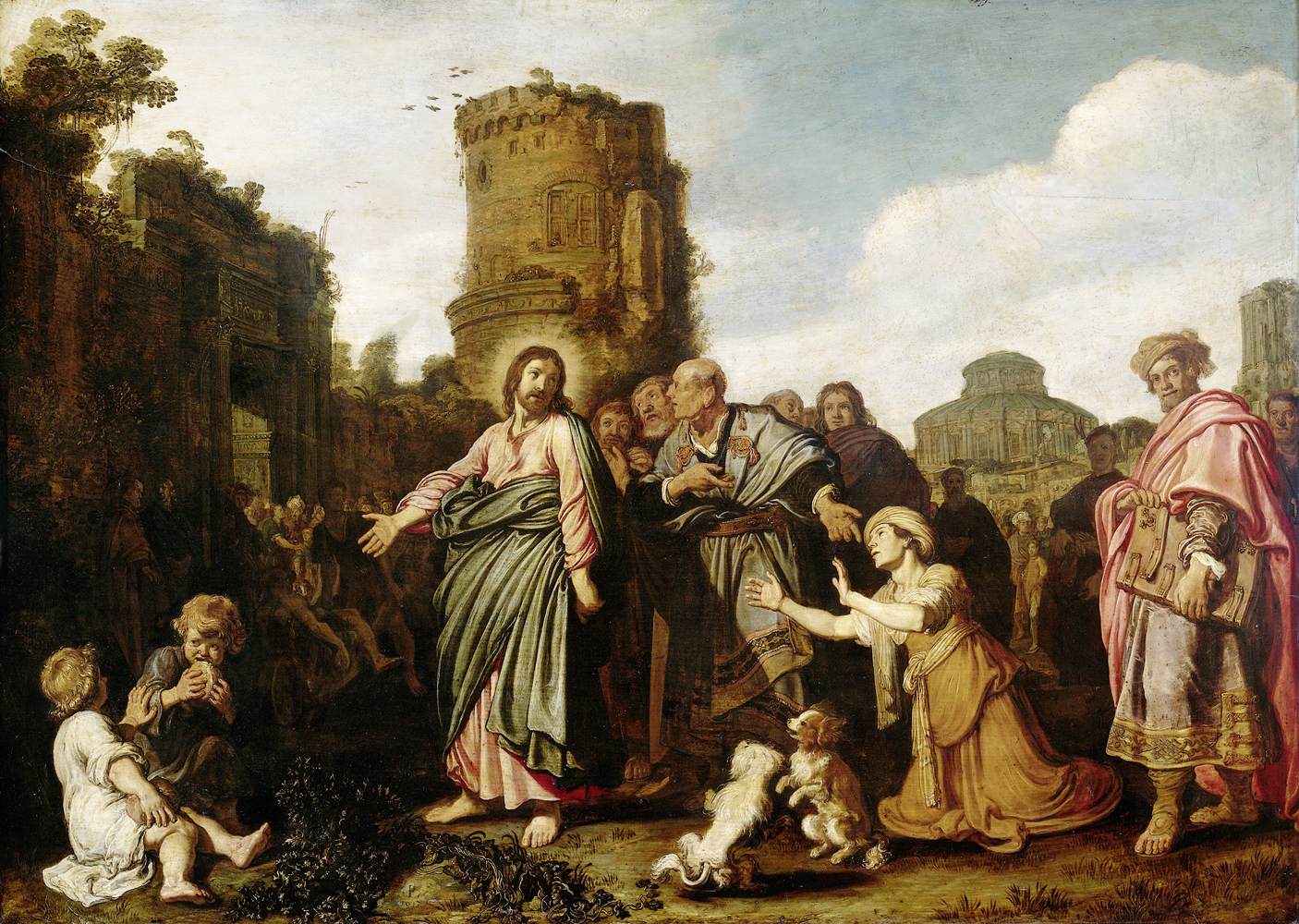
Even the dogs eat the scraps
A reflection on Matthew 15:21-28 and Romans 11:13-15, 29-32
I read this Gospel three times before it actually landed on me. My first reaction, if I’m honest, was the same one I imagine a lot of people have: why is Jesus being kind of harsh here? A woman comes running after him, terrified for her daughter, and he doesn’t even answer her at first. Then when he finally does speak, he uses a proverb that lumps Gentiles in with dogs. That’s not the Jesus I usually picture.
But sit with it a little longer and something else starts to show through.
This woman wasn’t Jewish. She had no claim on the promises made to Israel, no standing, nothing but a mother’s desperation and a hunch that this man could help her. And she doesn’t walk away when Jesus goes quiet. She doesn’t walk away when the disciples try to shoo her off. She doesn’t even walk away when Jesus says something that would’ve flattened most of us. She just keeps pressing in, and she does it with this line that I can’t get out of my head: “even the dogs eat the scraps that fall from their master’s table.” She takes the insult and turns it into an argument for mercy. That takes a kind of faith I’m not sure I have most days.
What’s interesting is that Paul is basically unpacking this same tension in the second reading. He’s writing to a bunch of Gentile Christians in Rome, people who, like the Canaanite woman, had no birthright claim to the promises made to Israel. And he’s trying to explain something that must have felt confusing at the time: why did so many of God’s own chosen people not recognize the Messiah, while people on the outside were the ones running toward him? Paul’s answer isn’t “Israel lost out and now it’s our turn.” He says the opposite — “the gifts and the call of God are irrevocable.” Nobody gets erased from God’s mercy because someone else received it. He says it a different way too: “God delivered all to disobedience, that he might have mercy upon all.” Everybody, at some point, is standing outside the door with no claim to make. That’s actually the point where mercy starts.
Put next to each other, the Gospel and the second reading are really saying the same thing from two directions. The Canaanite woman shows us what it looks like on the ground — one person, one desperate prayer, refusing to be turned away. Paul gives us the wider picture — that this isn’t a fluke, it’s how God has always worked, expanding the circle instead of guarding it. Neither the woman nor the Gentiles in Rome had any right to expect mercy by the old rules. They got it anyway.
I think about this in the context of my own life, chasing after two little kids most hours of the day, trying to build something on the side, praying in the car between errands because that’s the only quiet ten minutes I get. A lot of my prayers lately have felt like shouting into a bit of silence, waiting for an answer that doesn’t come right away. This Gospel is a reminder that silence from God isn’t the same as a “no.” And Paul’s reminder is just as good: whatever disqualifies me in my own head — the times I’ve drifted, the days my faith feels thin — none of that revokes the invitation. The gifts and the call of God are irrevocable. That includes me on my worst weeks, not just my best ones.
There’s also something humbling in how Jesus responds to the woman at the end. He doesn’t just heal her daughter quietly and move on. He praises her, right there in front of everyone: “O woman, great is your faith.” The outsider becomes the example. The one with no claim to make becomes the one Jesus holds up for the rest of us to notice. That’s the pattern all through Scripture, honestly — God keeps choosing the person nobody expected, and keeps the door open even wider than we’d have drawn it ourselves.
So if you’re in a season where your prayers feel unanswered, or you feel like you’re on the outside looking in when it comes to faith, this woman is good company, and so is Paul’s whole argument to the Romans. Keep showing up. Keep asking. Faith doesn’t always look like certainty; sometimes it just looks like refusing to leave.
“Lord, help me.” Three words. That was enough.