Bridget of Sweden and the Souls Before the Judge
In one of Bridget of Sweden’s visions, a king sits in judgment. Before him is a book, and around him stand people whose lives are being weighed. Some of them, Bridget understands, are still alive. Their final hour has not yet come.
It is a disturbing scene, but it contains an unexpected note of mercy. The judgment Bridget describes is not presented simply to satisfy anyone’s curiosity about the next world. It is shown while the living still have time to change.
That distinction matters. Bridget did not write as someone who thought the purpose of religion was to frighten people with elaborate punishments. She wrote as a Christian convinced that the way a person lives now matters beyond death, and that mercy is most urgently sought while there is still time to receive it.
The widow who wrote about eternity
By the time Bridget began recording her most famous revelations, she had already raised eight children and buried her husband, Ulf Gudmarsson. She knew what grief could do to a household. She knew too that death was not an abstract subject reserved for sermons. It came to families, monasteries and royal courts alike.
In the years after Ulf’s death, Bridget devoted increasing attention to prayer and the religious experiences she believed she had received from God. She wrote some accounts in Swedish and dictated others. Her confessors translated the material into Latin, and a later editor shaped the collection that became known as the Revelationes.
The text often reads like a drama. Figures speak, accusations are made, allegorical images appear, and Bridget records herself watching, questioning and learning. What we are reading is a medieval Christian mystic’s account of her interior experiences, not a transcript of events witnessed by other people.
A soul brought before judgment
The fourth book returns repeatedly to death and what follows it. In chapter 7, Bridget presents a vision of a soul facing judgment. There is an accusation, an angelic defender and the intercession of the Virgin Mary. The imagery can be severe. The judgment, however, is not the end of the account.
The subsequent chapters turn to purgatory and to the help that the living may give the departed through prayer and works of charity. For Bridget, the dead had not disappeared into a place where the love of others became irrelevant. The Church at prayer was still concerned with them.
There is a sober sort of comfort in that thought. A person may be unable to speak again to a father, a friend or a child who has died, yet Christian prayer does not regard the relationship as extinguished. It places the departed into the hands of God.
The Church’s teaching here is more restrained than Bridget’s imagery. Catholics believe in a particular judgment after death and in purification for those who die in God’s friendship but still need to be made holy. The elaborate details of Bridget’s visions are not themselves doctrines Catholics are required to accept.
The book and the judge
Later in Book IV, chapter 50, Bridget describes the whole world standing before a judgment seat. A book lies open. The scene has the enormous scale of a medieval painting of the Last Judgment, but it comes with an important qualification: she hears judgment spoken of people who are still living.
In the account, the judge speaks of those who might amend their lives. The consequence is plain. The vision is addressed, in the first instance, to the living. It is not a map for tourists of the afterlife; it is an invitation to take the present life seriously.
The next chapter narrows the view. A young woman’s soul is brought before the judge. She stands alone, without the protections of status, reputation or the comforting explanations a person may have relied on during life. The book seems to answer what she says.
A lifetime is difficult to describe even to oneself. We remember acts of kindness, but we also remember what we meant to do rather than what we did. We have a surprising talent for giving ourselves the benefit of the doubt. Bridget’s image of a book that answers back removes that advantage. Nothing needs to be exaggerated; nothing is lost.
There is no point in pretending that these passages are gentle. Medieval spiritual writing could be unsparing about judgment, and Bridget was not inclined to make the subject polite. Yet the point of the warning is not that God enjoys condemnation. Bridget’s accounts repeatedly connect justice with the possibility of repentance, intercession and mercy.
What the Church asks us to believe
In its teaching on the particular judgment, the Catholic Church affirms that each person’s life is referred to Christ at death. It also teaches that those who die in God’s friendship, but not yet fully purified, are assured of salvation and undergo purification. Prayer for the dead belongs to the Church’s ordinary life.
None of that depends on the precise scenery of a medieval vision. The Revelationes can be read as powerful religious literature without treating every figure and every punishment as a revealed diagram of eternity.
Pope John Paul II explicitly distinguished the Church’s recognition of Bridget’s holiness from a judgment about the truth of each individual revelation. That distinction does not dismiss her writings. It gives them their proper place.
Why Bridget wrote of judgment
Bridget’s world was not short of people who claimed they could judge others: rulers, clergy and courtiers all had their courts and their opinions. In her visions she placed every one of them, including herself, under another judgment. Human power was temporary. Respectability did not last forever. The poor and the powerful were not judged by different measures.
It is a serious thought, and a useful one. An account of death can make a person anxious about the future, or it can make the present more honest. Bridget wanted the second effect. The question her visions leave us with is not whether we can picture the courtroom she saw. It is whether we are willing, while still alive, to reckon truthfully with our own lives.
Read and pray
For Bridget’s life in Sweden and Rome, read Bridget of Sweden and the Road to Rome. To pray for someone who has died, visit the Prayer Library.
Continue reading
To learn about the devotion to Christ’s wounds associated with Bridget, read The Wounds of Christ and the Prayers Attributed to St. Bridget.
Sources and historical notes
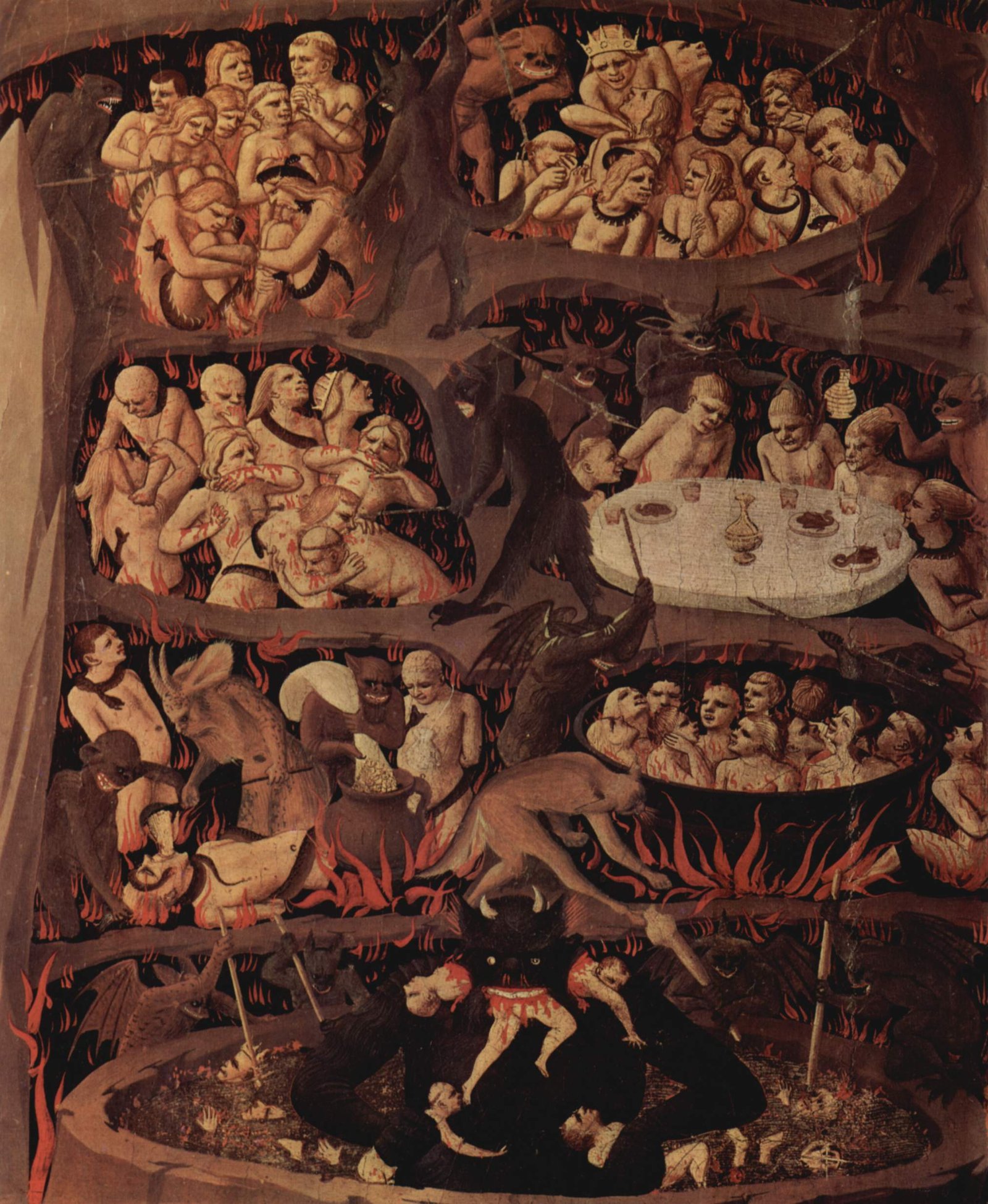
Featured artwork: The Last Judgment by Fra Angelico (15th century), used as a thematic illustration; it does not depict Bridget’s particular vision. Public-domain image source.
The descriptions of the visions are based on Book IV, chapters 7–9 and 50–51 of the Revelationes, as presented in Denis Searby’s translation, edited by Bridget Morris (Oxford University Press, 2008). For the Church’s distinction between Bridget’s holiness and her individual revelations, see Spes Aedificandi (1999). For Catholic teaching on the particular judgment and purgatory and prayer for the dead, see the Catechism of the Catholic Church, paragraphs 1021–1022 and 1030–1032. The article paraphrases Bridget’s visions rather than recreating undocumented dialogue or settings.